
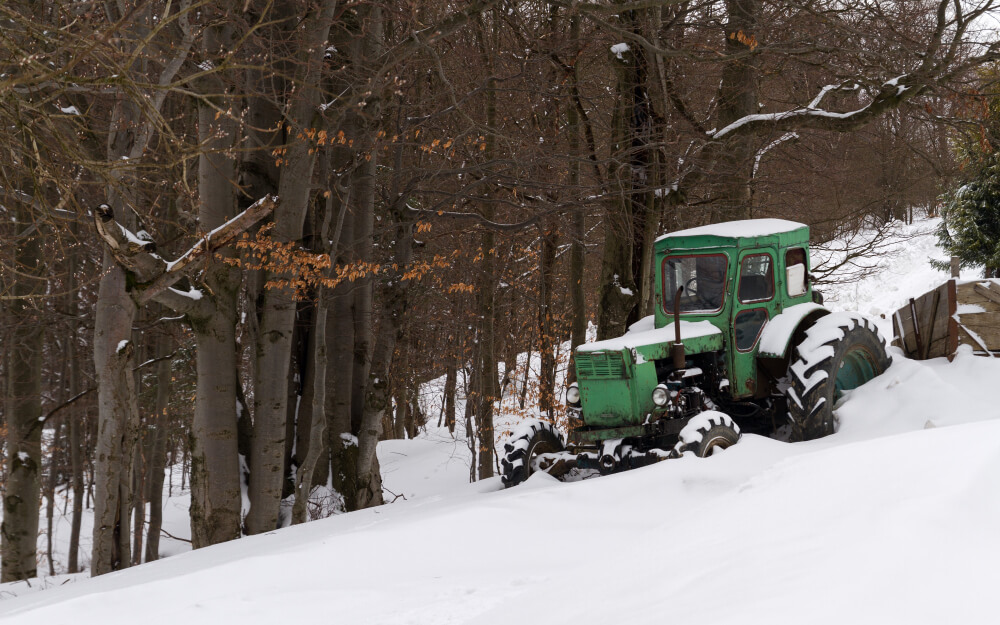
When a tractor or trailer gets stuck on snow or ice, the quickest way to turn a manageable problem into a dangerous recovery is to keep spinning tires or let someone “give it a yank.” Snow polishes into glare ice, ruts deepen fast, and a traction issue can become high-centering or a slide toward a ditch. If you are already in that situation and need heavy recovery help, Timber Towing and Recovery can be reached at (651) 318-0441. If the rig is stable and you can work safely, there are a few steps that often get you out without damaging equipment or putting anyone in the line of fire.
Do this first (before you try to pull out)
A stuck truck is also a roadside hazard. Before you focus on traction, make sure you are not setting up a secondary crash or a recovery injury.
Turn on hazards immediately. If you have reflective triangles, set them far enough back to give approaching drivers time to slow down. Extra distance matters on curves, hills, and in blowing snow. Keep everyone out of the area between vehicles and away from any path a strap, chain, or winch line would travel if it failed. Recovery gear can break under load, and injuries often happen because people stand exactly where the force is being applied.
Then stop spinning the tires. Wheelspin digs you down, packs snow into a hard ridge under the truck, and often overheats driveline components. If you have spun for more than a few seconds without movement, back off. Straighten the steering wheel because turning increases resistance, set the brakes, and reset your plan.
Take a quick look for hazards before you crawl around in the snow: fuel or fluid leaks, damaged air lines, wires pulled tight at the tractor-trailer connection, or anything dragging. If you smell something hot or see smoke, stop attempts and address that first. Heat and wheelspin are a common way a “stuck” call turns into a “disabled” call.
Figure out what kind of “stuck” you are dealing with
Getting unstuck is much easier when you identify why the rig will not move. Most winter stuck situations fall into one of three categories: loss of traction, high-centered, or physically hung up.
Loss of traction (wheels spin, rig does not climb)
This is the most common scenario: the tires cannot bite into the surface. It happens on polished intersections, compacted yard snow, icy inclines, or when snow is sitting on top of ice.
Clues you are mainly traction-limited:
- The truck rocks slightly but does not climb out
- The tires spin on top of the surface
- You do not see packed snow wedged under the axles or frame supporting weight
High-centered (resting on packed snow or a ridge)
High-centering means the truck or trailer is sitting on snow or ice underneath, so the drive tires do not have enough weight pressing into the surface to get traction. Chains and sand may not help much until you relieve that belly contact.
Clues you are high-centered:
- The drive tires spin easily as if they are “light”
- You see packed snow built up under the differential, frame, crossmembers, landing gear, or rear underride guard
- The rig feels “hung,” not simply slippery
Hung up (equipment or hardware is catching)
Sometimes the problem is not the tires at all. Landing gear feet, mudflaps, skirts, or the trailer’s rear guard can catch on a frozen windrow. Chains can also bind if they are loose or mis-sized.
If you suspect a hang-up, do not try to power through it. That is how landing gear gets bent, air lines get torn, and brackets get ripped off.
Slope, ditch edge, and jackknife risk
If you are off-camber or near a ditch edge, traction attempts can turn into a sideways slide. On ice, the trailer can start walking downhill even while the tractor creeps forward. If you notice any lateral shift, stop and reassess. Sideways movement is often the early warning before a bigger problem.
Safer self-recovery steps that often work (if conditions allow)
If the rig is stable, you have room, and you are not high-centered, a careful self-recovery may be possible. The goal is always the same: improve bite, reduce resistance, and apply power gently.
Improve traction at the tires
Shovel where it matters most. Clearing a little snow from the tread is not enough if the tire is trapped in a trench. Dig out in front of the drive tires and open the sides of the ruts so the tire can climb out. If the trailer is pushing snow like a plow, clear around trailer tires too. Many “stuck tractor” situations are really “stuck trailer” situations.
Add traction material if available:
- Sand or gravel: usually best because it creates texture and immediate grip
- Salt: can help, but it is slower in very cold temperatures and does not add much structure
- Kitty litter: inconsistent; some types crush into slippery pellets, so use cautiously
Chains are one of the most reliable upgrades in snow and ice when properly installed and appropriate for your route and conditions. If a chain starts slapping or walking, stop and fix it. A loose chain can do real damage fast.
Reduce resistance and break the bond
Packed snow can lock tires in place. A few minutes of digging can beat ten minutes of throttle.
Make the path wider, not just a narrow slot. You need the tire to climb, straighten, and roll, not spin in a groove. Straight wheels reduce resistance. If you are trying to turn while stuck, you are forcing the tire to plow sideways through packed snow.
Rocking a heavy rig like a passenger car is risky. The mass involved can turn small jolts into broken driveline parts or snapped gear. If you try a forward and reverse cycle at all, keep it smooth, minimal, and stop if you are digging deeper.
Use the truck’s traction features correctly
Locking differentials and traction control can help, but they are not magic. Some systems cut power aggressively when they detect slip, which can prevent you from applying the steady, controlled torque you need. Others allow enough spin to polish ice if you are too heavy-footed.
If you know your truck’s settings, use them intentionally. If you do not, default to gentle throttle, straight wheels, and minimal wheelspin. In winter recovery, finesse usually wins.
If your suspension is adjustable, changing ride height can sometimes shift weight enough to regain bite, but it can also reduce stability when you are off-camber. Avoid using suspension adjustments to wiggle a leaning rig back onto the road. Stability comes first.
If you have another vehicle to assist, set strict rules
Assisted pulls go wrong when they become sudden, angled, or improvised.
Only attempt a straight, low-angle pull, and only with rated recovery points. Avoid yanks. Shock loading breaks gear and injures people. If you cannot align a safe straight pull, it is usually better to stop than to improvise a side pull on ice.
Use equipment with known ratings. “It looks strong” is not a rating. Working Load Limit matters. Avoid tow balls and unapproved attachment points. Agree on one spotter, clear hand signals, and a hard-stop rule: if anything shifts sideways or the rig is not moving quickly under light load, stop and reassess.
Recovery gear basics (and what not to use)
Good recovery is controlled force. The wrong setup adds uncontrolled force.
Helpful basics:
- Shovel plus traction material (sand or gravel)
- Proper tire chains
- Rated straps or chains and rated shackles or hardware
- Reflective triangles, headlamp, warm gear
Common high-risk mistakes:
- Snatch or yank recoveries with heavy vehicles (shock loads can be extreme)
- Attaching to axles, steering components, landing gear, or trailer crossmembers
- Pulling at a bad angle and letting the trailer drift toward a ditch
- Using unknown or unrated straps or hardware
If you cannot confirm the rating of the gear or the integrity of the attachment points, you are gambling with both equipment and safety.
When to stop trying and call for professional recovery
There is a point where one more try costs more than it saves.
Stop self-recovery and call for help when:
- The trailer is leaning, off the road edge, or near a ditch
- The rig is jackknifed or starting to slide sideways
- You are high-centered on packed snow under the axles or frame
- You smell overheating, see smoke, or get drivetrain or brake warnings
- You clearly need a winch, multi-point control, or specialized equipment
- Repeated attempts are digging deeper and polishing the surface into ice
When you call, the most useful details are the ones that help dispatch send the right truck:
- Tractor and trailer type, approximate weight, loaded versus empty
- Exact location and best access for a heavy wrecker
- Road or lot conditions, slope, and whether lanes are blocked
- Any hazards (leaks, damaged lines, cargo concerns)
Preventing it next time (practical winter habits)
Avoiding the stuck is usually about decisions made before you stop moving.
Route and site planning helps more than most people expect. Soft shoulders, unplowed lots, and drift-prone entrances look normal until you are committed. When possible, walk questionable dock approaches or job-site entrances and look for hidden ice, windrows, and drop-offs.
Carry the right winter basics. A shovel, traction material, triangles, warm gear, and a headlamp pay off quickly. Chains can be a major advantage when conditions and regulations allow, but only if you have the correct size and you can install them safely.
Drive technique matters too: avoid abrupt steering and aggressive throttle on ice, keep momentum when safe, and do not confuse momentum with speed. Slow, steady torque and a clean path beat wheelspin almost every time.
Summary
If your tractor or trailer is stuck in snow or ice, keeping it stable and stopping wheelspin early does more to prevent damage than any last-second throttle attempt. Clear space for the tires to climb, add traction thoughtfully, and avoid angled or shock-load pulls that can slide a rig further off-road or break recovery gear. When the situation involves leaning, high-centering, jackknifing, or any sideways movement, getting professional recovery involved sooner is often the safest choice. Timber Towing and Recovery can be reached at (651) 318-0441 if you need heavy-duty help to get the rig out without turning a winter problem into a rollover or major repair.


